A new vision was put forward suggesting that Cheongju, Chungcheongbuk-do, should no longer remain in a “second-place strategy” of following Seoul, but instead connect directly with the global stage.
A special lecture on culture–technology convergence held on the 2nd at Chungbuk National University was organized through the initiative of New York–based attorney Chang Junhwan, CEO of Gallery Chang. The event drew significant attention from students, particularly with the participation of world-renowned artist Shane Guffogg, who was born in California.
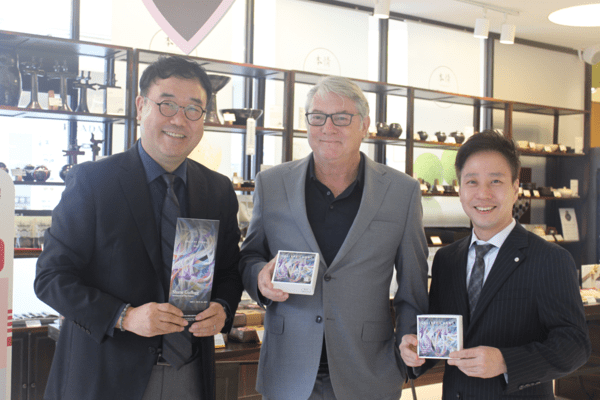
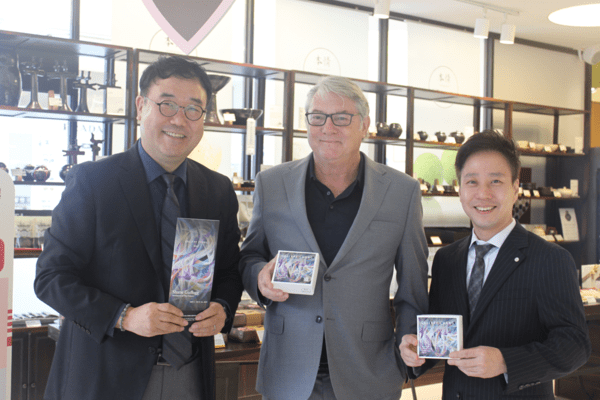
Following the lecture, a roundtable discussion was held at the headquarters of Cheongju-based specialty chocolate company Bonjeong, joined by its CEO Lee Jong-tae. Together, the three speakers shared a common awareness: that Chungbuk should be envisioned not as a mere “regional city,” but as a global culture-and-technology hub.
Attorney Chang Junhwan proposed the concept of a “city to stay” as a direction for Chungbuk’s urban development.
“Many regional cities have the weakness that people simply visit and leave,” he said. “But to revitalize the economy, we need to create conditions that encourage people to stay one more day.” He emphasized the activation of the nighttime economy as a core requirement.
“A city lives when the night is alive,” Chang noted, calling for more programs that young people can participate in, as well as cultural events that continue into the evening. He added that “even if railways and roads are connected, the local economy cannot grow unless people actually stay,” citing the PyeongChang Winter Olympics, where nighttime content and cultural events contributed significantly to the regional economy.
Addressing students directly, he advised, “Success doesn’t come from a single giant leap, but from a series of small successes. It’s important to keep creating modest achievements here in Chungbuk and connect that confidence to the global stage.”
He described the lecture itself as a “cultural experiment for Chungbuk’s future,” adding, “Chungbuk has extraordinary natural assets like Songnisan and a deep cultural heritage. Let’s start today by thinking together about how to connect these to the global market.”
Visiting Cheongju for his first lecture in Korea, Shane Guffogg shared his fresh impressions of Chungbuk with students.
“On the way to Cheongju, I saw landscapes of greenhouses and rolling hills,” he said. “It reminded me of rural New England or the outskirts of New York. This place, where nature and city coexist, has real appeal as a global testbed.”
He was especially impressed by Korea’s café culture. “Korean cafés are on a completely different level,” he remarked. “Even highway rest stops have distinct designs and concepts. They’re not just places to sell coffee, but feel like artworks in themselves. This kind of creativity is a core competitive strength of Korean culture.”
Guffogg also introduced his own artistic practice. “My work layers multiple dimensions of time onto a single canvas,” he explained. “That process resembles the concept of superposition in quantum computing. Art and science may seem different, but in fact they speak the same language.”
The lecture concluded with a flood of student questions. Guffogg expressed his satisfaction, saying, “When the audience laughs and nods, the lecture truly comes alive. I was impressed by the active discussion culture among both professors and students at Chungbuk National University.”
He added, “I hope small cultural movements that begin in Chungbuk will spread beyond Asia to the world,” and expressed his desire to continue engaging with Korea. He is currently presenting a new series, Memories of Our Future, at Gallery Chang Seoul.
Lee Jong-tae, CEO of Bonjeong, emphasized the role that regional companies must play on the global stage.
“Cultural value often begins in small cities rather than major metropolises,” he said. “Just as artistic movements in France and galleries in Manhattan grew by absorbing content from outside the center, Chungbuk can also generate such momentum.”
He stressed that regional brands should function not merely as “sellable products,” but as mediators of global cultural exchange. “Population may decline, but cultural and economic value must grow,” Lee explained. “As a regional brand, Bonjeong is actively participating so that Chungbuk can have a voice on the global stage.”
Referring to Bonjeong’s collaboration with a New York gallery, he noted, “This project marked the first case of a Chungbuk brand entering a global cultural platform.” He added, “We will continue to participate in world-class cultural projects to grow Bonjeong into a global brand.”
Lee concluded, “When regional companies join hands with culture, they can create new engines of growth. Bonjeong will stand as a cultural partner until the day Chungbuk gains global recognition.”
The special lecture and roundtable together reaffirmed the possibility that Chungbuk can connect directly with the world, rather than merely following in Seoul’s footsteps. Each speaker emphasized a different aspect—Chang Junhwan highlighted a “city to stay,” Shane Guffogg stressed the “globalization of cultural creativity,” and Lee Jong-tae underscored the “global leap of regional brands”—but their message was unified.